
Herniated Disc Treatment in Dubai
A slipped disc is one of the most common reasons people are told they need spine surgery, and one of the most common conditions that gets better without it. The first job is an accurate diagnosis.
- German board-certified surgeon
- Arabic, English, German
- Saudi German Hospital Dubai

What is a herniated disc?
Each disc between your vertebrae has a tough outer ring and a soft gel-like centre. When the outer ring tears, the inner material pushes out and can press on a nerve root or the spinal cord. That pressure, plus the inflammation around it, is what produces the pain.
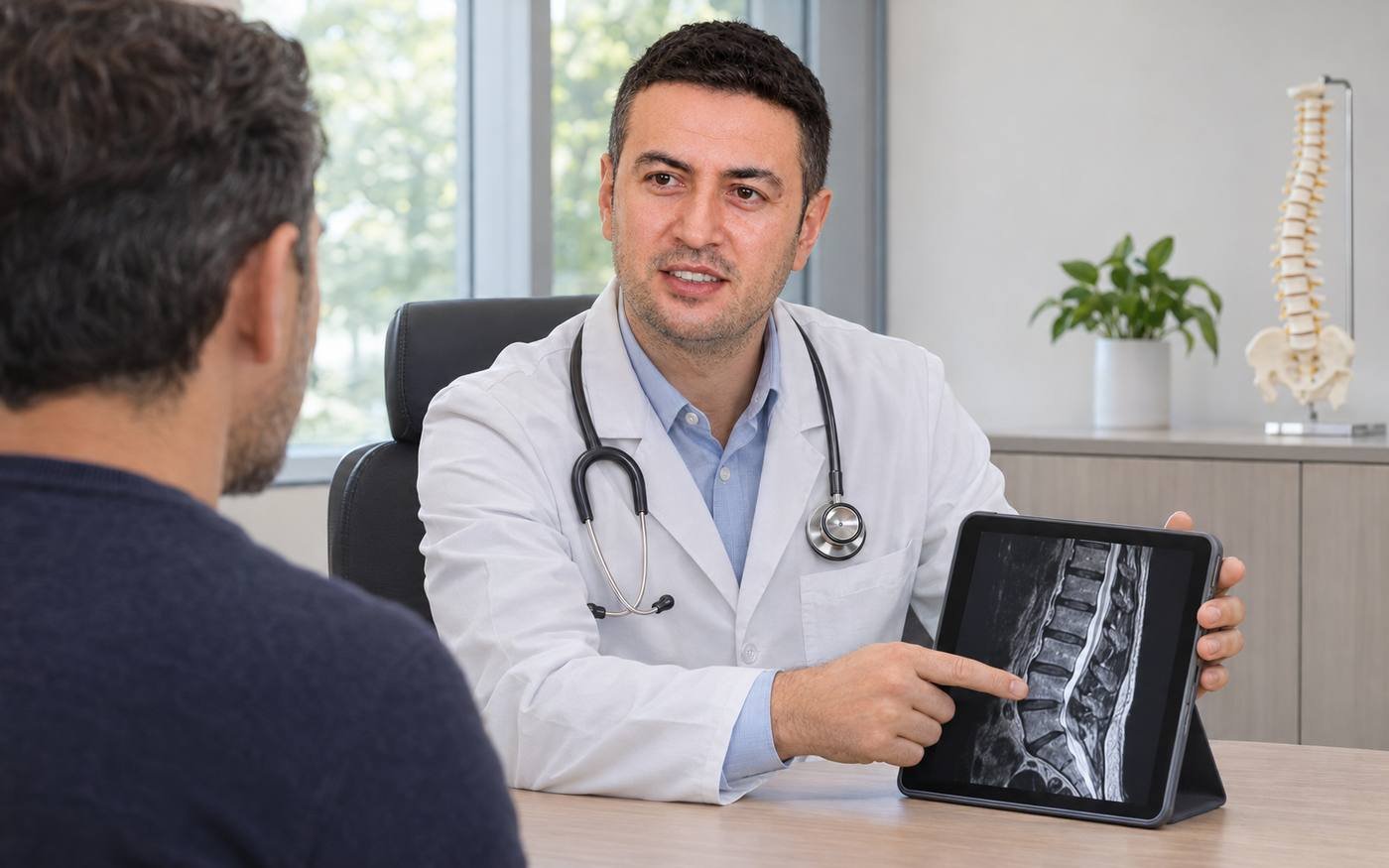
A disc can bulge without causing any symptoms at all. Scans of people with no back pain often show disc changes, which is why a finding on an MRI only matters when it matches your symptoms and your examination.
Symptoms that point to a disc
Where you feel it depends on which nerve is compressed. A lumbar disc typically causes pain running into the buttock and down the leg; a cervical disc causes pain into the shoulder and arm.
- Pain radiating into one leg or one arm, often worse than the back or neck pain itself
- Numbness or pins and needles following a line down the limb
- Weakness, for example difficulty lifting the foot or gripping
- Pain worse on coughing, sneezing or sitting for long periods
When you should be seen urgently
Most disc problems are not emergencies. A small number are. Go to an emergency department the same day if you develop loss of bladder or bowel control, numbness in the saddle area between the legs, or rapidly worsening weakness in both legs. These can indicate cauda equina syndrome, which needs decompression within hours rather than weeks.
How it is treated
Most herniated discs settle over six to twelve weeks with the right plan: activity modification rather than bed rest, anti-inflammatory medication, and structured physiotherapy. Where leg pain is severe, an image-guided nerve root block can calm the inflammation and let rehabilitation begin.
Surgery is considered when severe pain persists despite proper conservative treatment, when there is progressive weakness, or in an emergency such as cauda equina. The options are microdiscectomy through a small incision under the microscope, or full-endoscopic discectomy through an incision under one centimetre.
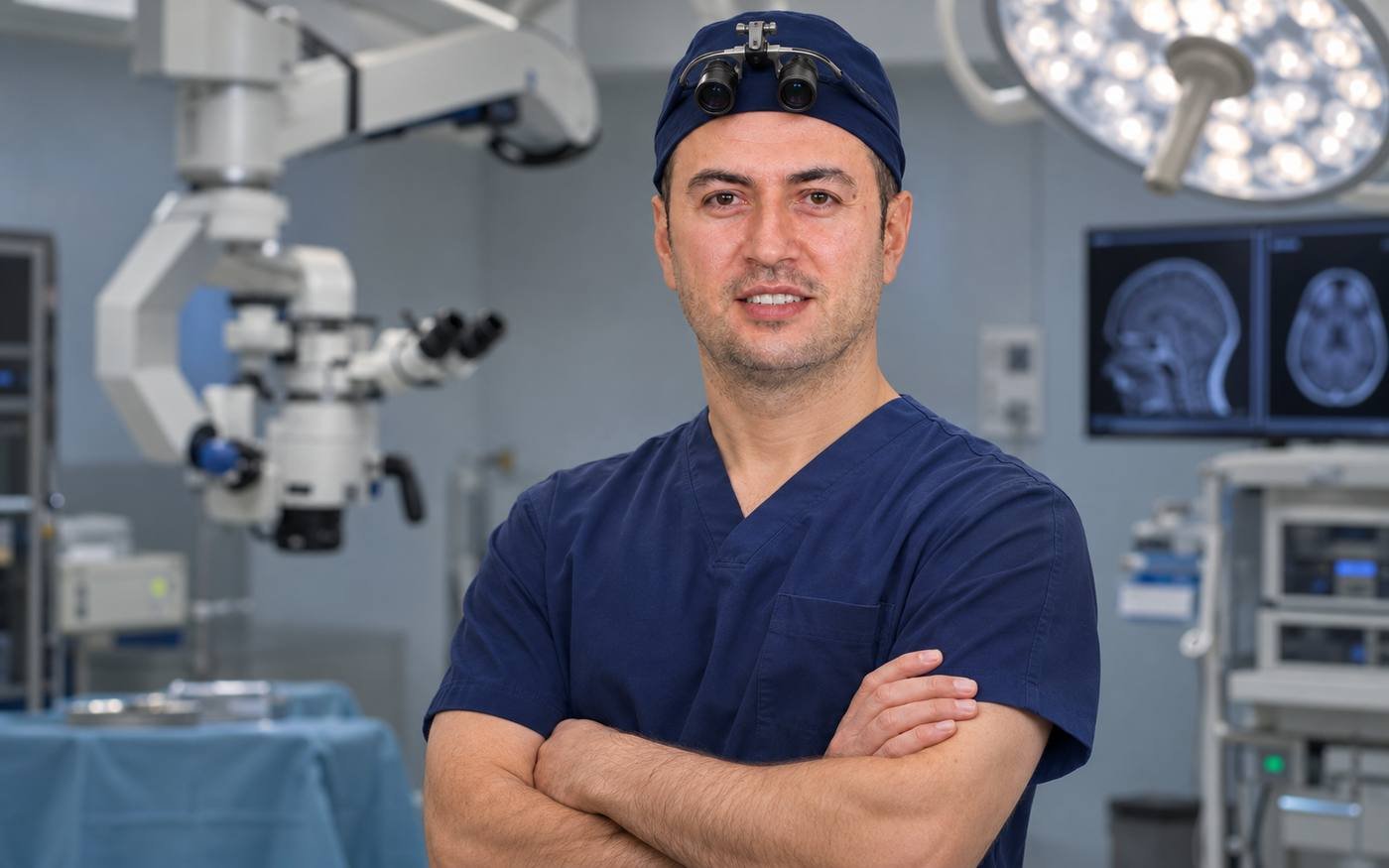

Dr. Nayef Soufan
German board-certified Consultant Neurosurgeon at Saudi German Hospital Dubai, treating brain, spine and nerve conditions.
- German Board (Facharzt) in Neurosurgery, Munich 2017
- EUROSPINE Diploma 2025 and DWG Master Training
- More than 2,100 brain and spine surgeries
- 11 years in the German healthcare system
Your Treatment Journey
- 01Consultation and imaging review
In clinic or by video. Dr. Soufan examines you, reviews your MRI or CT himself and explains what the images actually show.
- 02Diagnosis and all options
You get a clear diagnosis and every reasonable option, non-surgical first. Surgery is discussed only when the findings call for it.
- 03Pre-operative checks and insurance
If you proceed, the Saudi German Hospital team arranges blood tests, anaesthetic review and insurance approval.
- 04The procedure
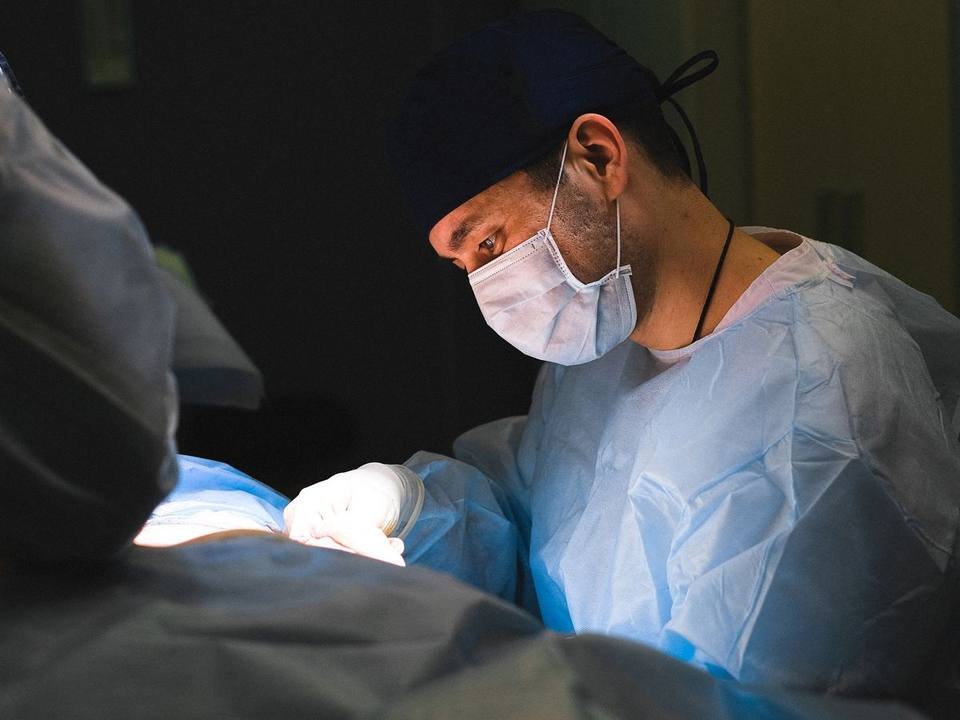
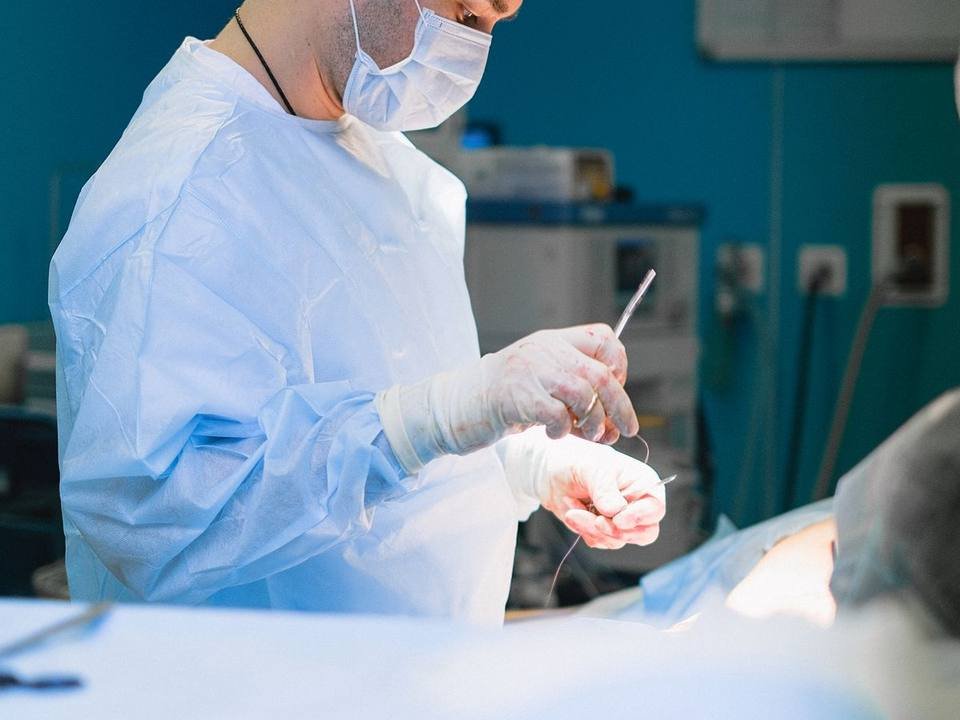
Performed at Saudi German Hospital Dubai with neuronavigation and intraoperative imaging, through the smallest approach your condition allows.
- 05Follow-up and rehabilitation
Wound check, a staged return to activity and a physiotherapy plan, with Dr. Soufan reviewing your progress until you are back to normal life.

Frequently Asked Questions
Still have a question? Call the clinic and the team will help you.
Call the clinic+971 50 595 4783Can a herniated disc heal on its own?
Often, yes. The extruded disc material is gradually reabsorbed by the body and inflammation settles. Most people improve substantially within six to twelve weeks with the right non-surgical plan.
How do I know if I need surgery?
Surgery is considered when leg or arm pain remains severe despite several weeks of proper conservative treatment, when there is progressive muscle weakness, or when there are emergency signs such as loss of bladder control. Imaging alone never decides it.
Is endoscopic surgery better than microdiscectomy?
Both have excellent results in the right patient. Endoscopic surgery uses a smaller incision and less muscle disruption, which can mean a faster early recovery. The choice depends on the size and position of the disc fragment, which Dr. Soufan assesses on your MRI.
How long until I can go back to work after disc surgery?
Most patients walk within hours and go home the same day or the next morning. Desk work usually resumes in one to two weeks, physical work in four to six, depending on the procedure.
Will the disc herniate again?
Recurrence happens in a small percentage of cases. Core strengthening, lifting technique and weight control reduce the risk, and the physiotherapy plan after surgery is built around that.
Start With Clarity
Send your MRI or book a consultation. You will leave with a clear diagnosis and every option explained, in your language.
Call+971 50 595 4783