
Hydrocephalus Treatment and Shunt Surgery in Dubai
Treating hydrocephalus means restoring the drainage of cerebrospinal fluid, either by creating a new internal route or by diverting fluid through a valve-controlled shunt.
- German board-certified surgeon
- Arabic, English, German
- Saudi German Hospital Dubai

Choosing the operation
The right procedure depends on why the fluid is not draining. Where there is a discrete blockage, for example at the aqueduct, an endoscopic third ventriculostomy can create a new internal route and avoid implanting hardware altogether.
Where absorption itself is impaired, as in most cases of normal pressure hydrocephalus, a shunt is required.
Endoscopic third ventriculostomy
A small endoscope is passed into the ventricle and an opening is made in the floor of the third ventricle, allowing fluid to bypass the obstruction and reach its normal absorption sites.
- No implanted hardware, so no shunt-related complications later
- Suitable for obstructive hydrocephalus with the right anatomy
- Performed through a small opening in the skull
- Success depends on the cause and the patient, and is assessed case by case
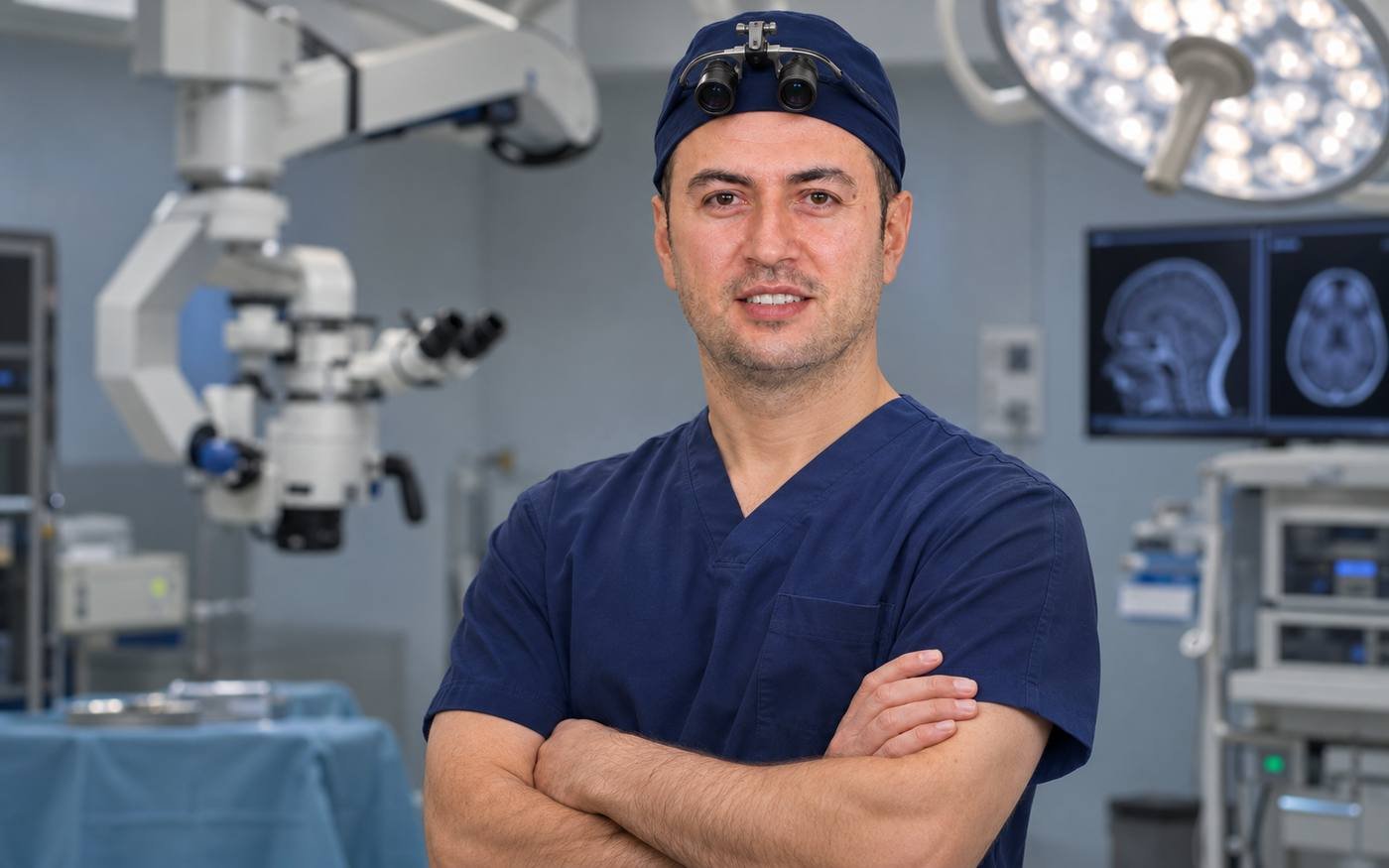
Shunt surgery
A thin catheter is placed into the ventricle and connected through a valve to tubing tunnelled under the skin to the abdominal cavity, where fluid is absorbed. Modern programmable valves allow the drainage rate to be adjusted afterwards with a magnetic device, without further surgery.
The operation usually takes around an hour. Before a shunt is offered for normal pressure hydrocephalus, a trial of fluid drainage is often performed to confirm that walking and cognition improve when pressure is reduced.
Living with a shunt
Most shunts function for years. Patients and families are taught the signs of shunt malfunction, which include returning headache, drowsiness, vomiting or deterioration in walking, and are told exactly what to do if they occur.
Follow-up includes periodic imaging and, where a programmable valve is used, checking the setting after any strong magnetic exposure such as an MRI.


Dr. Nayef Soufan
German board-certified Consultant Neurosurgeon at Saudi German Hospital Dubai, treating brain, spine and nerve conditions.
- German Board (Facharzt) in Neurosurgery, Munich 2017
- EUROSPINE Diploma 2025 and DWG Master Training
- More than 2,100 brain and spine surgeries
- 11 years in the German healthcare system
Your Treatment Journey
- 01Consultation and imaging review
In clinic or by video. Dr. Soufan examines you, reviews your MRI or CT himself and explains what the images actually show.
- 02Diagnosis and all options
You get a clear diagnosis and every reasonable option, non-surgical first. Surgery is discussed only when the findings call for it.
- 03Pre-operative checks and insurance
If you proceed, the Saudi German Hospital team arranges blood tests, anaesthetic review and insurance approval.
- 04The procedure
Performed at Saudi German Hospital Dubai with neuronavigation and intraoperative imaging, through the smallest approach your condition allows.
- 05Follow-up and rehabilitation
Wound check, a staged return to activity and a physiotherapy plan, with Dr. Soufan reviewing your progress until you are back to normal life.
Related Treatments and Conditions
Frequently Asked Questions
Still have a question? Call the clinic and the team will help you.
Call the clinic+971 50 595 4783How long does a shunt last?
Many work for years. They can block or become infected, which is why patients are taught the warning signs.
Will the shunt be visible?
The tubing runs under the skin. A small bump may be felt behind the ear, but the system is not visible in normal clothing.
Can I have an MRI with a shunt?
Yes. Programmable valve settings should be checked afterwards, which is a quick outpatient procedure.
Is endoscopic surgery better than a shunt?
Where the anatomy suits it, avoiding implanted hardware is an advantage. It is not suitable for every type of hydrocephalus.
Will symptoms improve?
In normal pressure hydrocephalus, walking tends to improve most reliably, which is why a drainage trial is used to predict response before surgery.
Start With Clarity
Send your MRI or book a consultation. You will leave with a clear diagnosis and every option explained, in your language.
Call+971 50 595 4783