
Neck Pain and Cervical Disc Treatment in Dubai
Neck pain that stays in the neck and neck pain that travels into the arm are different problems with different treatments. Telling them apart is the first step.
- German board-certified surgeon
- Arabic, English, German
- Saudi German Hospital Dubai

Cervical disc disease and spondylosis
The discs in the neck lose height and flexibility with age. As they do, the joints and ligaments around them thicken, and the space available for the nerve roots and the spinal cord narrows. This process is called cervical spondylosis and it is extremely common after the age of 40.
A disc can also herniate acutely, pressing on a nerve root and causing cervical radiculopathy, or on the spinal cord itself, causing cervical myelopathy.
Radiculopathy and myelopathy
These two patterns matter because they are managed very differently.
- Radiculopathy: pain, numbness or weakness travelling into one arm, following the path of a single nerve root. Often settles without surgery.
- Myelopathy: pressure on the spinal cord itself. Clumsy hands, difficulty with buttons, unsteady walking, heavy legs.
- Myelopathy is assessed promptly because cord compression can cause progressive, lasting loss of function.

Non-surgical treatment
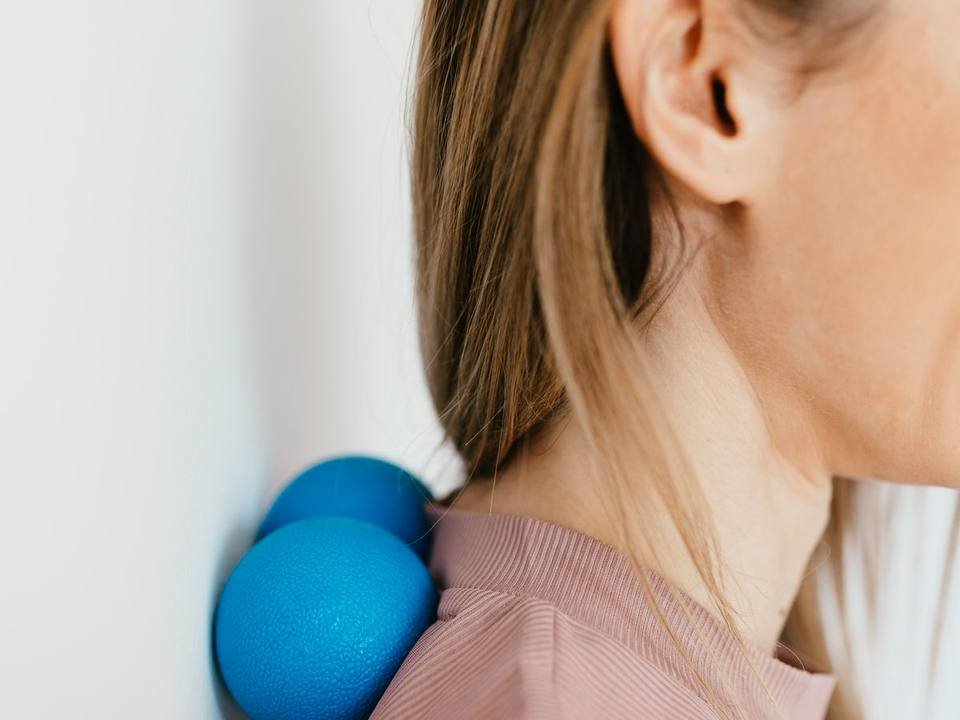
Most neck pain and most arm pain from a cervical disc improves over six to twelve weeks. Treatment includes activity modification, analgesia, a tailored physiotherapy programme for posture and deep neck flexor strength, and attention to workstation setup. A cervical nerve root block can be used for severe arm pain.
Surgical options
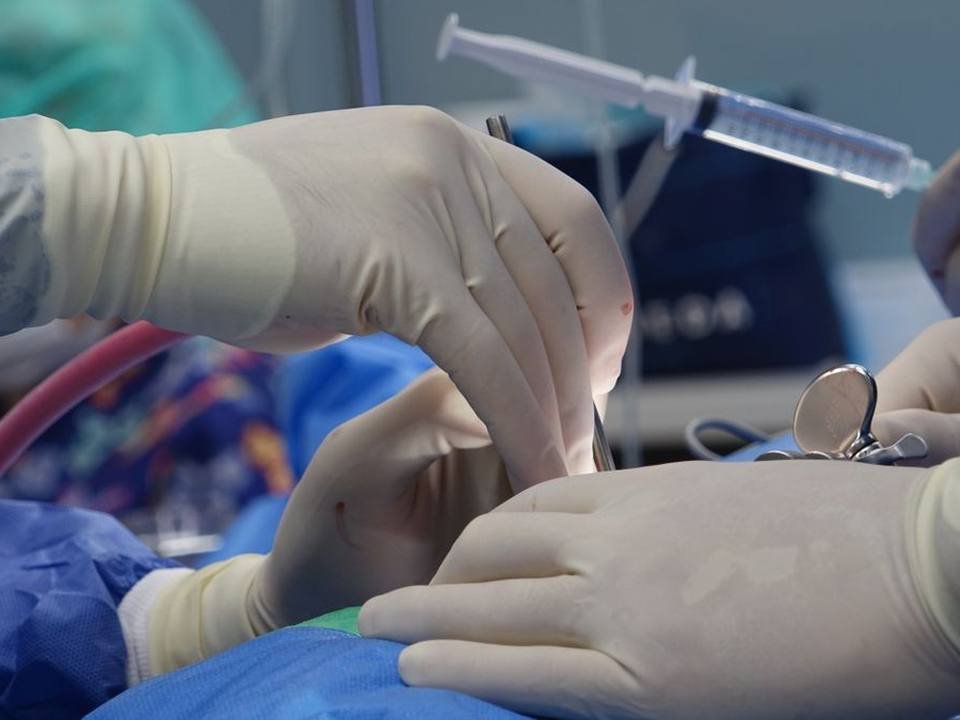
When arm pain persists despite proper treatment, or when there is weakness or cord compression, surgery decompresses the nerve or the cord. The main options are artificial disc replacement, which preserves movement at that level, anterior discectomy and fusion, and posterior foraminotomy for certain nerve root compressions.
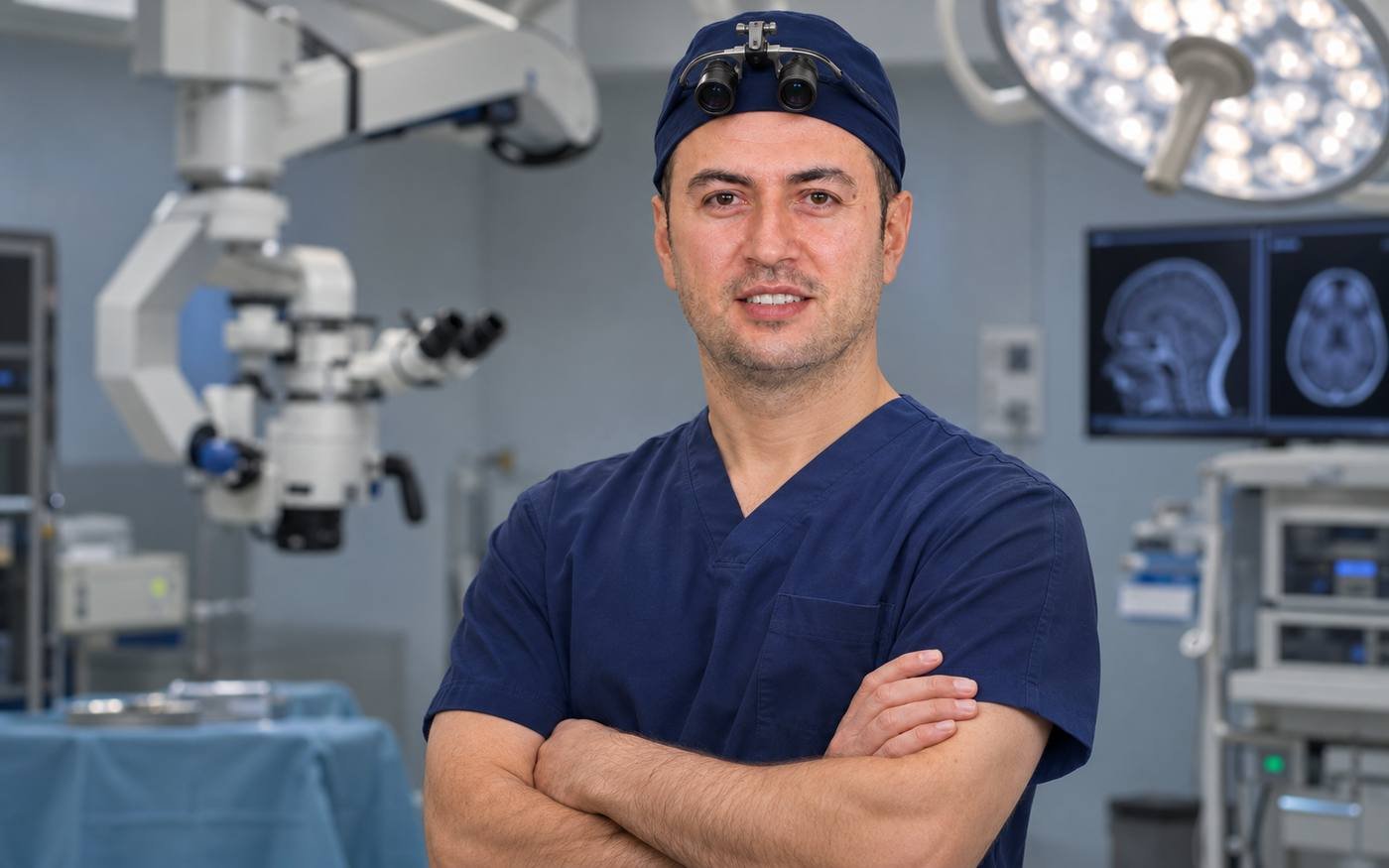

Dr. Nayef Soufan
German board-certified Consultant Neurosurgeon at Saudi German Hospital Dubai, treating brain, spine and nerve conditions.
- German Board (Facharzt) in Neurosurgery, Munich 2017
- EUROSPINE Diploma 2025 and DWG Master Training
- More than 2,100 brain and spine surgeries
- 11 years in the German healthcare system
Your Treatment Journey
- 01Consultation and imaging review
In clinic or by video. Dr. Soufan examines you, reviews your MRI or CT himself and explains what the images actually show.
- 02Diagnosis and all options
You get a clear diagnosis and every reasonable option, non-surgical first. Surgery is discussed only when the findings call for it.
- 03Pre-operative checks and insurance
If you proceed, the Saudi German Hospital team arranges blood tests, anaesthetic review and insurance approval.
- 04The procedure
Performed at Saudi German Hospital Dubai with neuronavigation and intraoperative imaging, through the smallest approach your condition allows.
- 05Follow-up and rehabilitation
Wound check, a staged return to activity and a physiotherapy plan, with Dr. Soufan reviewing your progress until you are back to normal life.

Frequently Asked Questions
Still have a question? Call the clinic and the team will help you.
Call the clinic+971 50 595 4783Is cervical disc replacement better than fusion?
In suitable patients disc replacement preserves movement at the operated level and may reduce stress on the discs above and below. It is not suitable for every neck, for example where there is significant arthritis or instability. The decision is based on your imaging.
Can neck pain cause headaches?
Yes. Pain from the upper cervical joints commonly refers into the back of the head, and this type of headache often improves when the neck is treated.
Does a cervical collar help?
Short-term use after an acute injury can help, but prolonged use weakens the neck muscles and slows recovery. Dr. Soufan prefers early controlled movement in most cases.
What is the warning sign I should act on?
Clumsiness in the hands, dropping objects, difficulty with buttons or an unsteady walk. These can indicate spinal cord compression and need prompt assessment.
How long is recovery after cervical surgery?
Most patients stay one night and return to desk work in roughly two weeks. Driving and heavier activity resume over four to six weeks depending on the procedure.
Start With Clarity
Send your MRI or book a consultation. You will leave with a clear diagnosis and every option explained, in your language.
Call+971 50 595 4783