
Trigeminal Neuralgia Treatment in Dubai
Trigeminal neuralgia produces some of the most severe pain in medicine, and it is frequently mistaken for dental pain. Many patients have teeth removed before the real diagnosis is made.
- German board-certified surgeon
- Arabic, English, German
- Saudi German Hospital Dubai

What trigeminal neuralgia is
The trigeminal nerve carries sensation from the face. In classical trigeminal neuralgia a blood vessel lies against the nerve where it leaves the brainstem and pulses against it, wearing away the insulating sheath over years. The nerve then misfires, producing bursts of extreme pain.
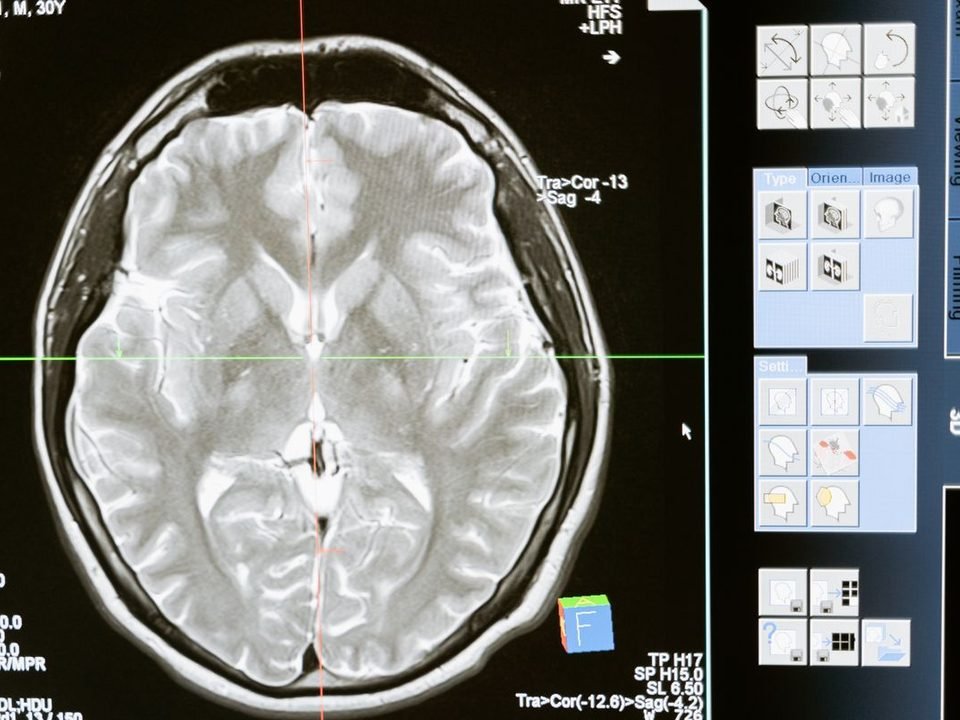
Less commonly the cause is a tumour or multiple sclerosis, which is why an MRI is part of the assessment in every case.
Recognising it
The pattern is distinctive once you know it.
- Sudden, severe, electric shock or stabbing pain in the cheek, jaw or around the eye
- Attacks lasting seconds to a couple of minutes, often in clusters
- Almost always on one side of the face only
- Triggered by light touch, chewing, talking, brushing teeth, shaving or cold air
- Periods of complete remission followed by relapse
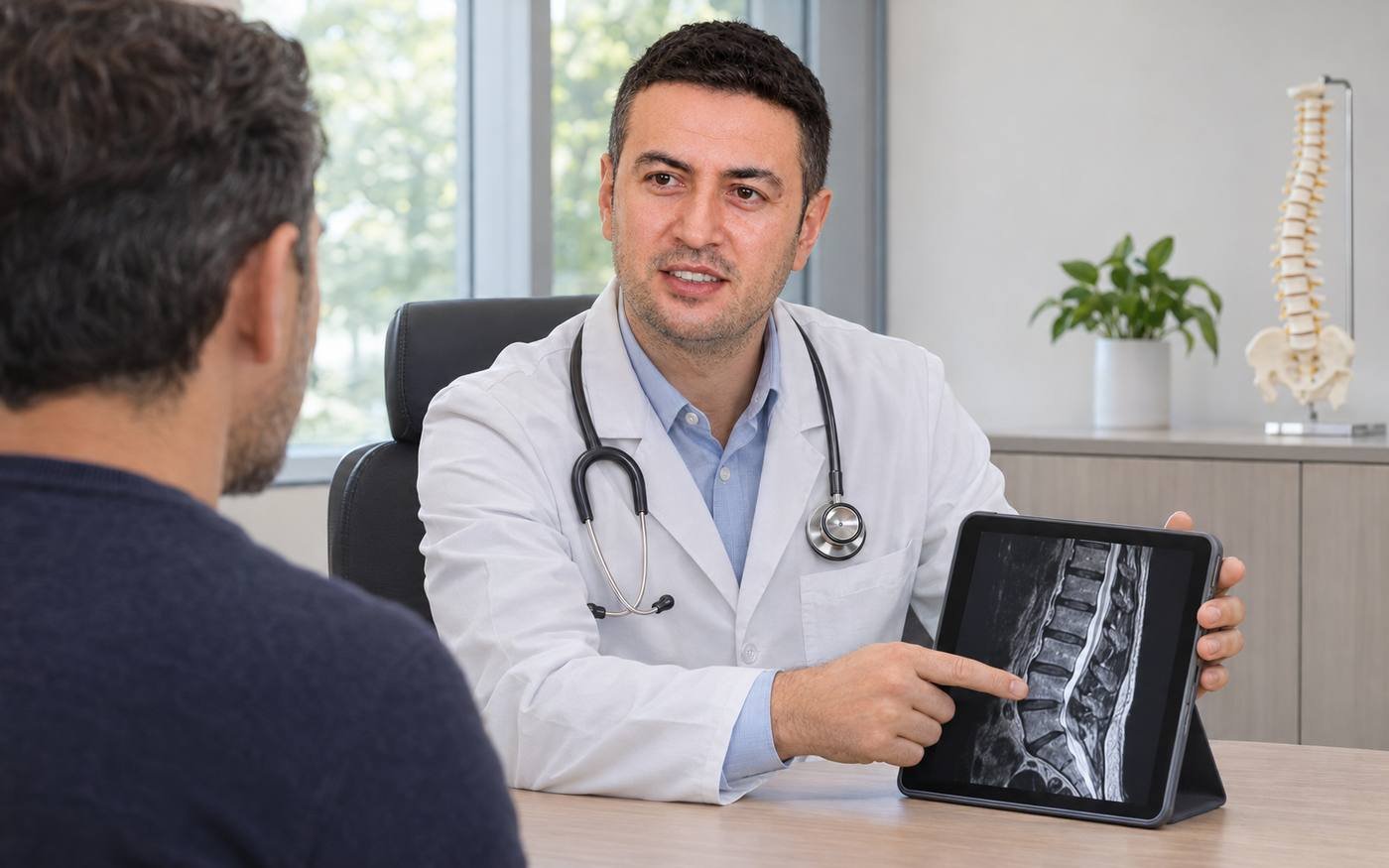
Medical treatment first
Carbamazepine and related medications are highly effective for most patients and are the first treatment. The response is often so characteristic that it supports the diagnosis.
Medication is not a cure. Over time some patients find that the dose required causes unacceptable drowsiness, unsteadiness or blood test abnormalities, or that control is lost altogether. That is the point at which surgical options are discussed.
Microvascular decompression
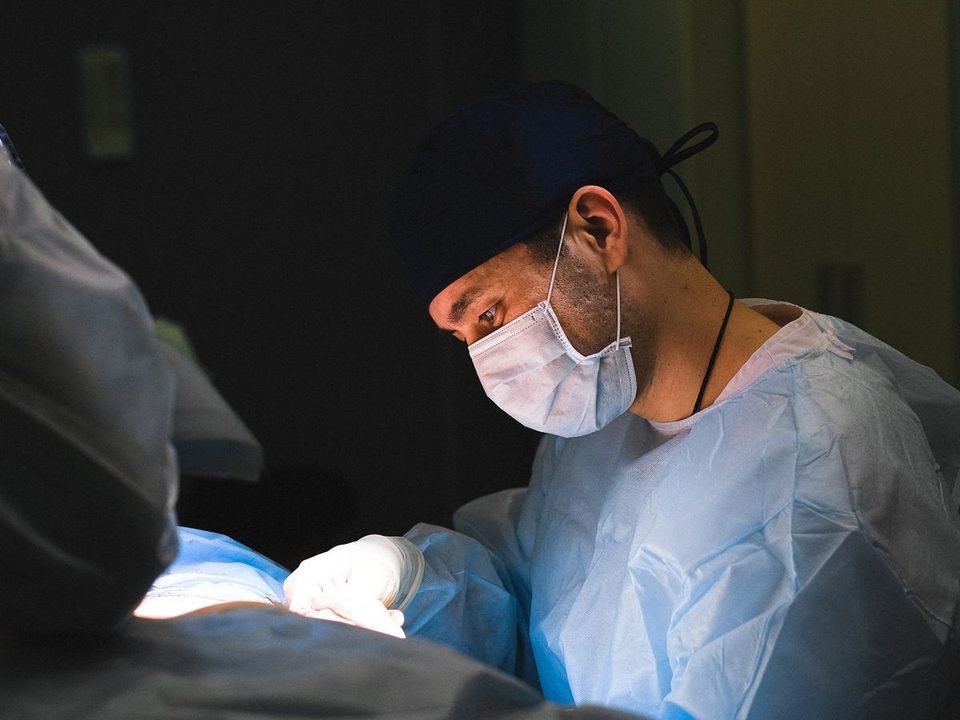
Microvascular decompression addresses the cause rather than the symptom. Through a small opening behind the ear, the offending vessel is identified under the microscope and lifted off the nerve, with a small protective cushion placed between them.
It is the only treatment that targets the underlying mechanism, and in appropriately selected patients it offers the most durable relief while preserving facial sensation.
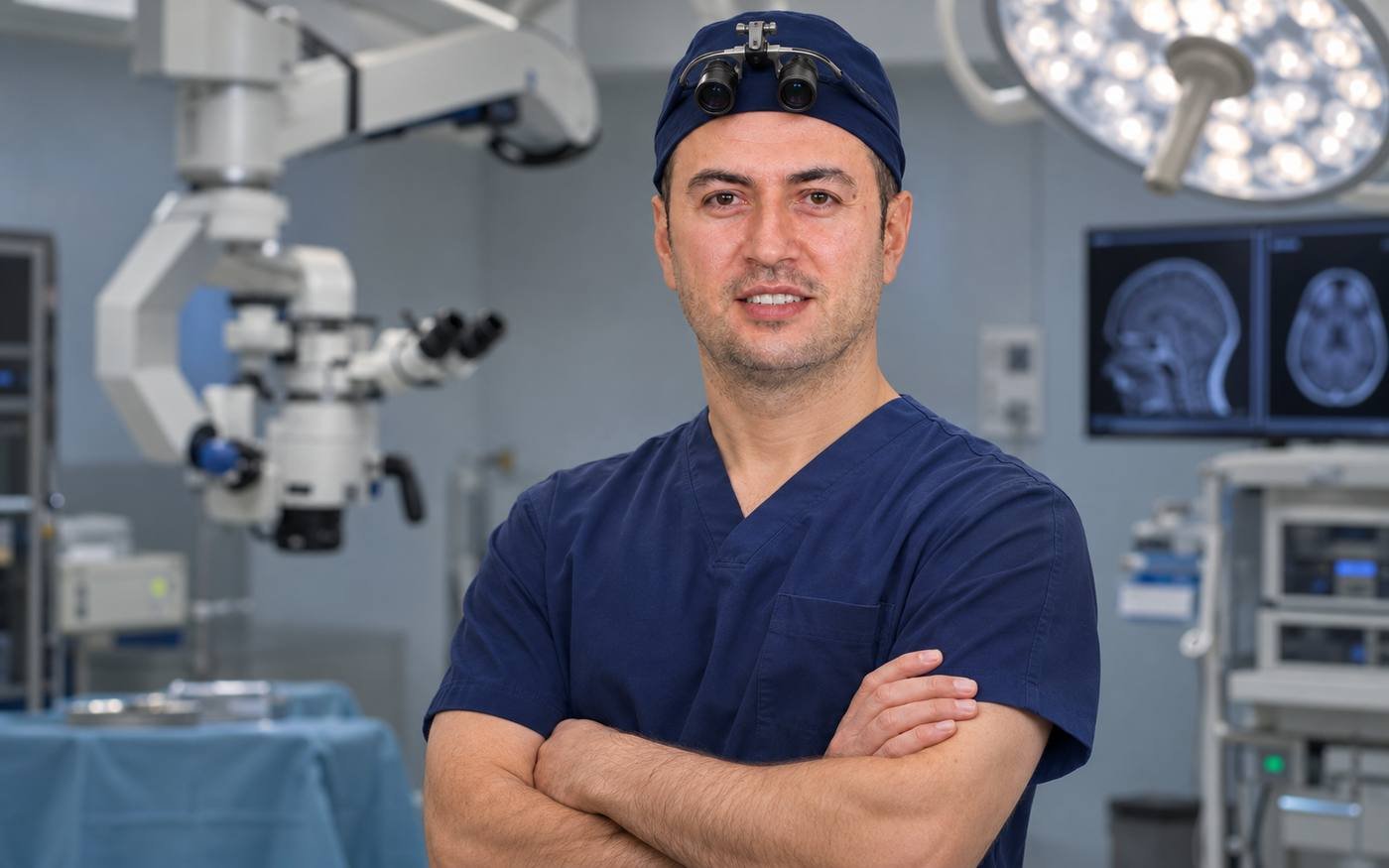

Dr. Nayef Soufan
German board-certified Consultant Neurosurgeon at Saudi German Hospital Dubai, treating brain, spine and nerve conditions.
- German Board (Facharzt) in Neurosurgery, Munich 2017
- EUROSPINE Diploma 2025 and DWG Master Training
- More than 2,100 brain and spine surgeries
- 11 years in the German healthcare system
Your Treatment Journey
- 01Consultation and imaging review
In clinic or by video. Dr. Soufan examines you, reviews your MRI or CT himself and explains what the images actually show.
- 02Diagnosis and all options
You get a clear diagnosis and every reasonable option, non-surgical first. Surgery is discussed only when the findings call for it.
- 03Pre-operative checks and insurance
If you proceed, the Saudi German Hospital team arranges blood tests, anaesthetic review and insurance approval.
- 04The procedure
Performed at Saudi German Hospital Dubai with neuronavigation and intraoperative imaging, through the smallest approach your condition allows.
- 05Follow-up and rehabilitation
Wound check, a staged return to activity and a physiotherapy plan, with Dr. Soufan reviewing your progress until you are back to normal life.

Frequently Asked Questions
Still have a question? Call the clinic and the team will help you.
Call the clinic+971 50 595 4783How is it different from dental pain?
Trigeminal neuralgia comes in sudden bursts triggered by light touch or movement, with normal periods in between, and dental treatment does not help. Persistent throbbing pain that keeps you awake is more typical of a dental cause.
Does it always need surgery?
No. Most patients are controlled on medication for years. Surgery is considered when medication stops working or the side effects become intolerable.
How long does relief from surgery last?
Microvascular decompression gives the most durable relief of the available options in suitable patients. Some patients experience recurrence over many years and can be treated again.
Will my face be numb after surgery?
Microvascular decompression is designed to preserve sensation, unlike some needle-based procedures where numbness is an expected trade-off for pain relief.
Do I need an MRI?
Yes. Imaging rules out a tumour or multiple sclerosis as the cause and shows the relationship between the nerve and nearby vessels.
Start With Clarity
Send your MRI or book a consultation. You will leave with a clear diagnosis and every option explained, in your language.
Call+971 50 595 4783