
Why a second opinion is worth it
Spine surgery decisions are rarely black and white. The same MRI can reasonably lead to different recommendations depending on how much weight a surgeon gives to the imaging, the examination, and your symptoms and goals.
Research on second opinions in spinal surgery has repeatedly found that a meaningful proportion result in a changed diagnosis or a changed treatment recommendation, often towards a less invasive option. That alone justifies the appointment.
Asking for one is routine. No reasonable surgeon is offended by it.
When it is most worth getting
- You have been offered a fusion, which is a bigger commitment than decompression alone
- Surgery has been recommended for back pain without significant leg pain
- You were offered surgery at the first appointment, without a trial of proper conservative treatment
- Two doctors have told you different things
- You have been told nothing can be done
- You simply do not feel your questions were answered
What to send
The quality of the second opinion depends heavily on what you provide.
- The actual images, not just the report. A disc or a digital link. The report is a summary; the surgeon needs to see the scan.
- All relevant imaging, including older scans. Comparing how things have changed over time is often the most useful information available.
- The radiology reports and any previous specialist letters.
- Operation notes, if you have had spine surgery before.
- A short written summary of your symptoms: where the pain is, what makes it better or worse, what treatment you have already tried and for how long.
That last item is the one patients most often skip, and it is the one that most improves the consultation.
What to ask
- What do you think is causing my symptoms?
- Does the scan finding match my examination?
- What happens if I do nothing for three months?
- Have I had a proper trial of non-surgical treatment?
- If surgery is needed, is there a less invasive option that would achieve the same thing?
- What is the realistic benefit, specifically for leg pain and for back pain?
- What are the risks, and what is the recovery?
The question about back pain versus leg pain is particularly revealing. Spine surgery is generally far more predictable for nerve pain in the limb than for pain in the back itself, and a careful surgeon will say so.
What a good second opinion sounds like
A thorough assessment examines you, not just your scan. It explains which specific finding is causing which specific symptom. It gives you a clear answer about non-surgical options, and it is honest about what surgery will and will not fix.
It may well agree with the first opinion. That is a useful outcome: you proceed with confidence instead of doubt.
Be cautious of an assessment that recommends surgery without examining you, that cannot explain why a less invasive option is unsuitable, or that promises a specific outcome. Nobody can guarantee a result.
What happens after
You will have one of three outcomes: the original plan confirmed, a less invasive alternative proposed, or a recommendation to try proper non-surgical treatment first.
All three are useful. The point of a second opinion is not to find someone who disagrees; it is to make a decision you understand.
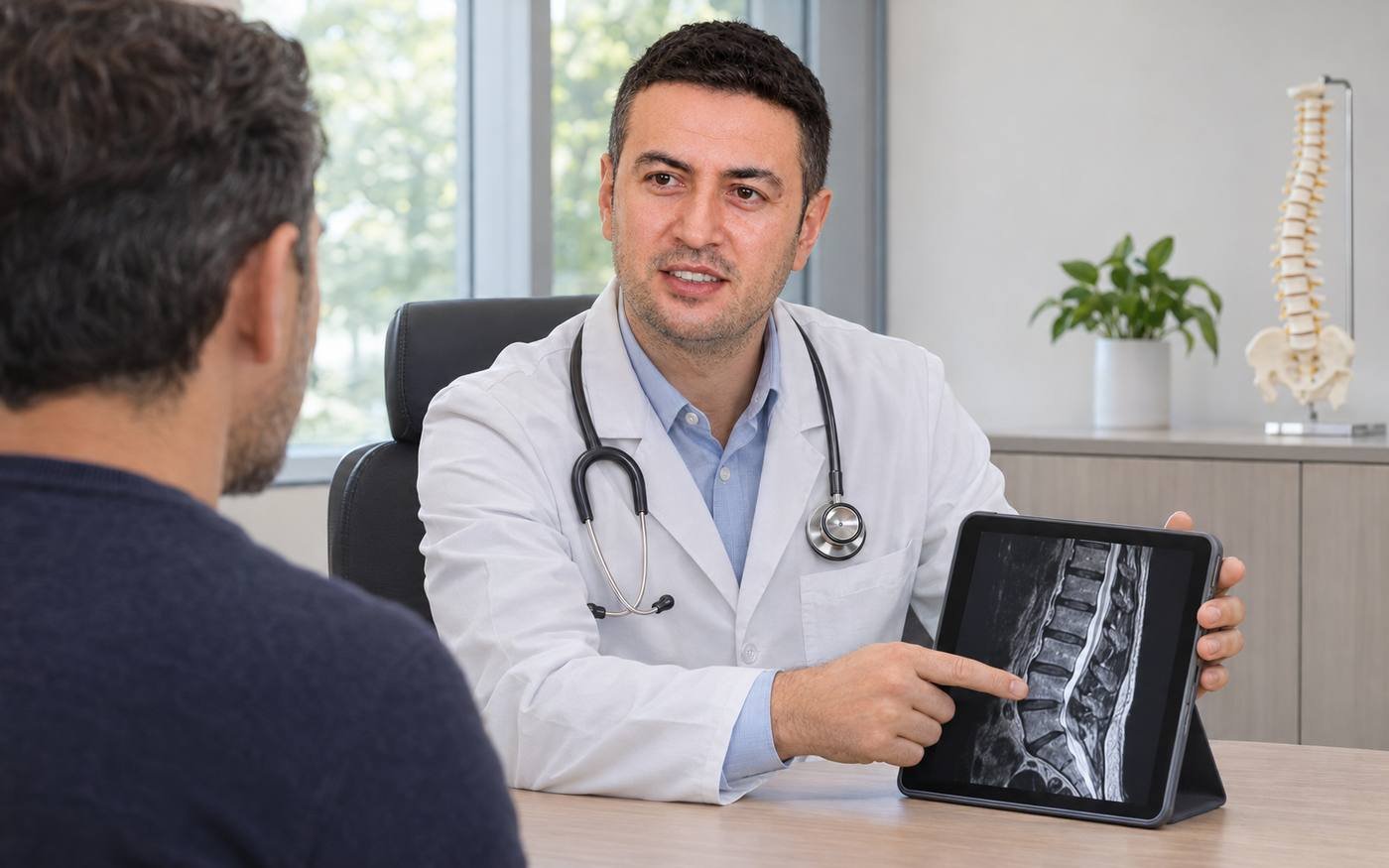
Dr. Soufan reviews imaging for second opinions in clinic or by video consultation for patients outside the UAE. Many patients leave with a non-surgical plan.
Common questions
Is it rude to ask for a second opinion on spine surgery?
No. It is routine and no reasonable surgeon objects. Spine surgery decisions are often finely balanced.
What should I send for a spine surgery second opinion?
The actual imaging rather than only the report, any older scans for comparison, radiology and specialist reports, previous operation notes, and a short written summary of your symptoms and treatments tried.
Can I get a second opinion from outside the UAE?
Yes. Patients abroad commonly start with a video consultation and an imaging review before deciding whether to travel.