
Spine Injury and Fracture Treatment in Dubai
Dr. Soufan trained in a certified trauma centre in Germany, where spinal injuries from road traffic accidents, falls and sport are managed daily.
- German board-certified surgeon
- Arabic, English, German
- Saudi German Hospital Dubai
Types of spinal injury
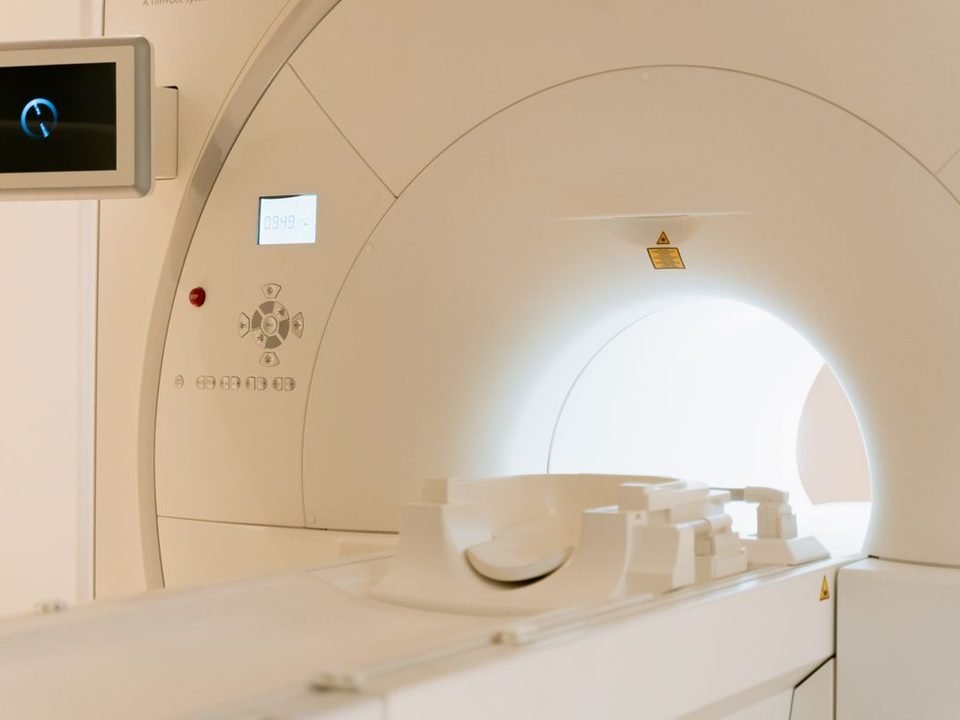
Spinal injuries range from ligament sprains through compression fractures to unstable fracture-dislocations with spinal cord injury. The central question in every case is whether the spine is stable and whether the neural structures are at risk.
In older patients with osteoporosis, a vertebral compression fracture can occur after a minor fall or even a cough, and is a common cause of sudden severe back pain.
What needs urgent assessment
After any significant injury to the back or neck, certain features require immediate hospital assessment.
- Weakness, numbness or tingling in the arms or legs
- Loss of bladder or bowel control
- Severe midline back or neck pain after a fall or collision
- Any injury with loss of consciousness or significant head trauma
- Do not move someone with a suspected spinal injury unnecessarily. Call 998.
Diagnosis
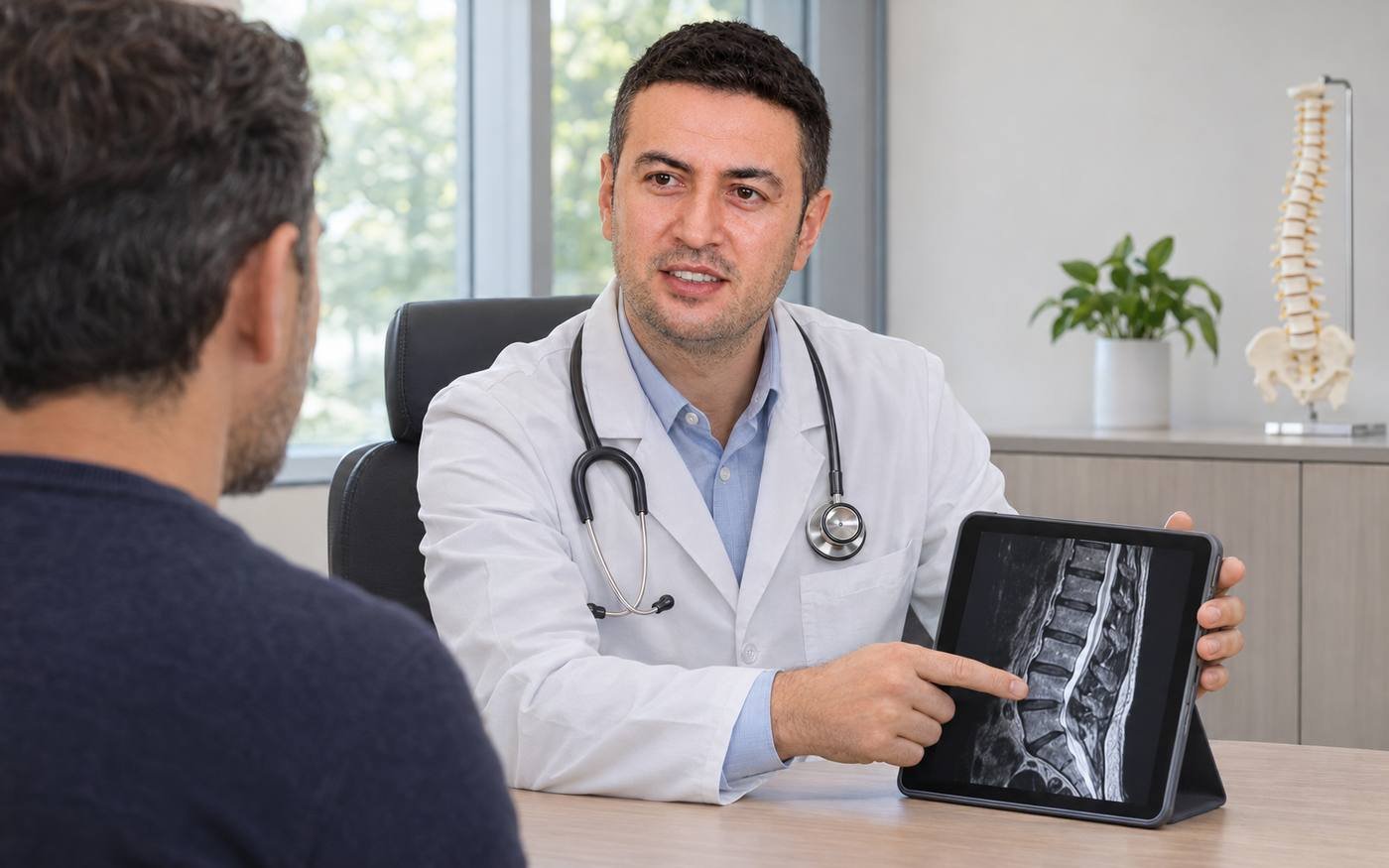
CT defines the bony injury precisely and is the primary investigation after trauma. MRI shows the spinal cord, nerve roots, discs and the posterior ligament complex, which determines whether an apparently simple fracture is in fact unstable.
Where osteoporosis is suspected, bone density assessment and medical treatment are arranged, because preventing the next fracture matters as much as treating this one.
Treatment
Stable injuries are managed with pain control, bracing where appropriate and graded mobilisation. Painful osteoporotic compression fractures that do not settle can be treated with kyphoplasty or vertebroplasty, in which cement is injected into the collapsed vertebra, usually with rapid pain relief.
Unstable injuries, or those with neural compression, require surgical decompression and stabilisation, often using minimally invasive techniques with navigation to place screws accurately.

Dr. Nayef Soufan
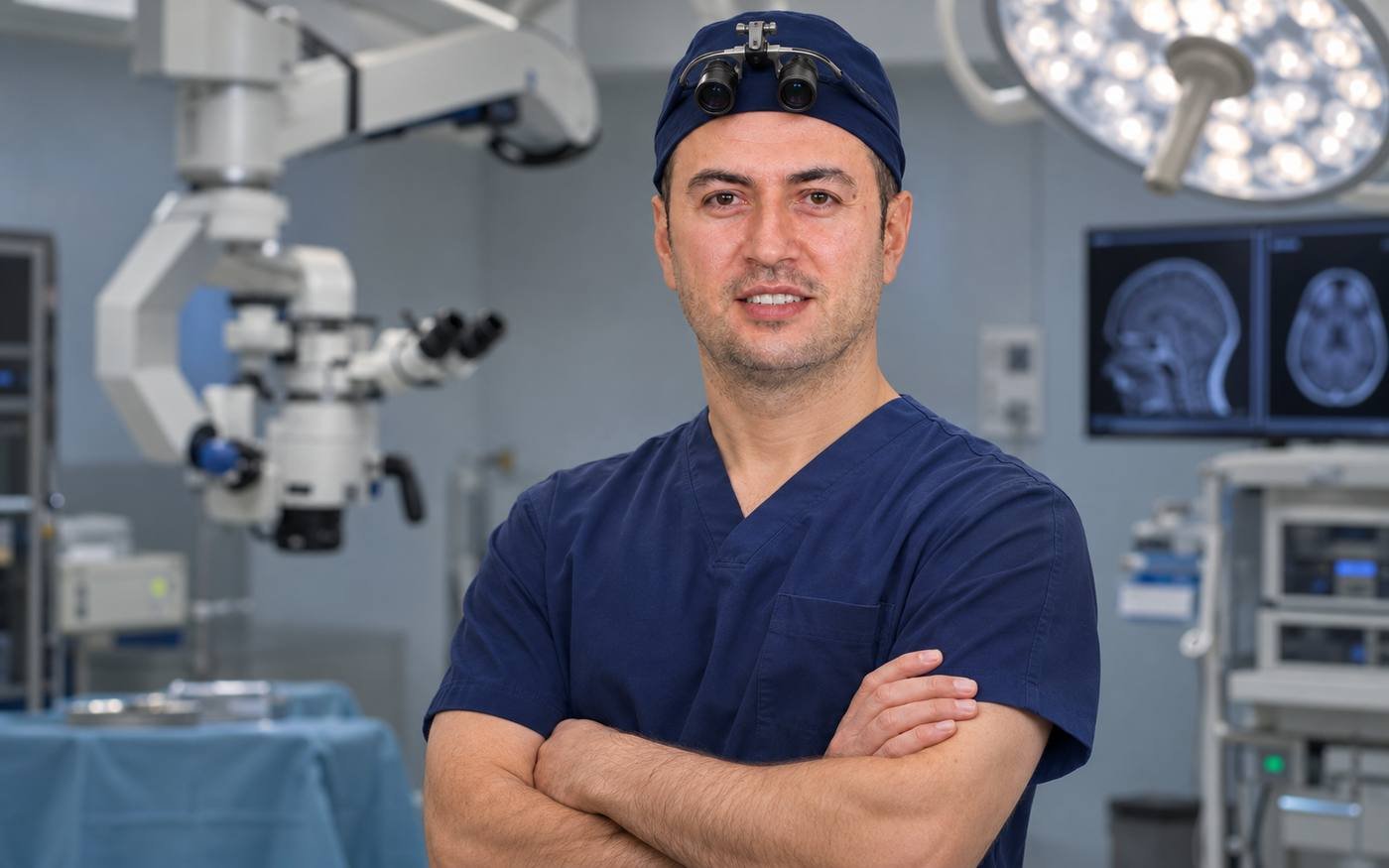
German board-certified Consultant Neurosurgeon at Saudi German Hospital Dubai, treating brain, spine and nerve conditions.
- German Board (Facharzt) in Neurosurgery, Munich 2017
- EUROSPINE Diploma 2025 and DWG Master Training
- More than 2,100 brain and spine surgeries
- 11 years in the German healthcare system
Your Treatment Journey
- 01Consultation and imaging review
In clinic or by video. Dr. Soufan examines you, reviews your MRI or CT himself and explains what the images actually show.
- 02Diagnosis and all options
You get a clear diagnosis and every reasonable option, non-surgical first. Surgery is discussed only when the findings call for it.
- 03Pre-operative checks and insurance
If you proceed, the Saudi German Hospital team arranges blood tests, anaesthetic review and insurance approval.
- 04The procedure
Performed at Saudi German Hospital Dubai with neuronavigation and intraoperative imaging, through the smallest approach your condition allows.
- 05Follow-up and rehabilitation
Wound check, a staged return to activity and a physiotherapy plan, with Dr. Soufan reviewing your progress until you are back to normal life.


Frequently Asked Questions
Still have a question? Call the clinic and the team will help you.
Call the clinic+971 50 595 4783How do I know if a fracture is serious?
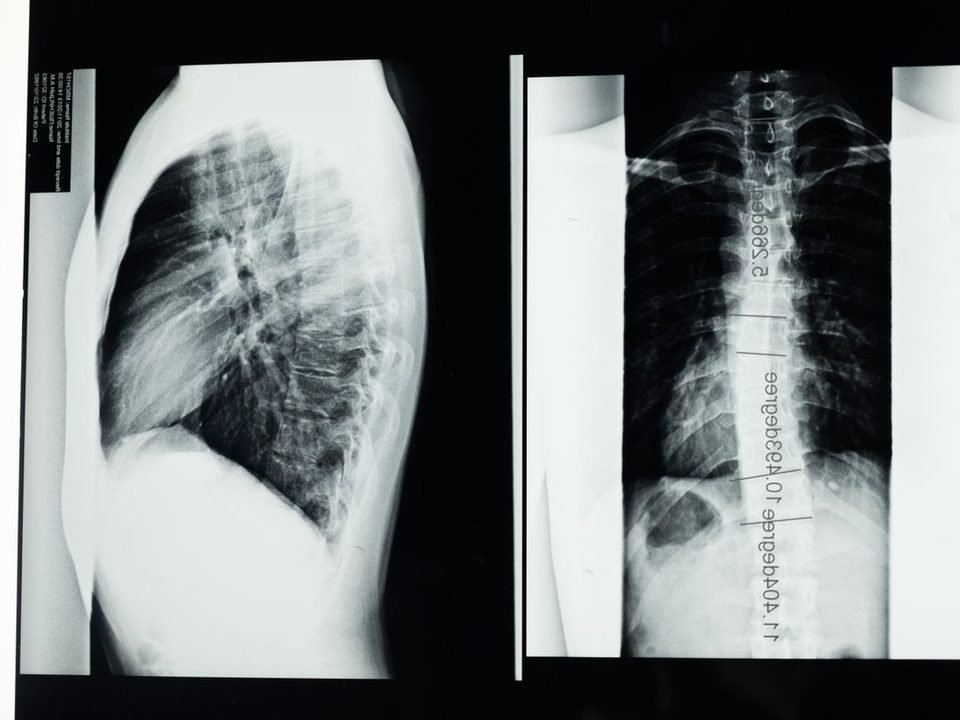
Imaging decides it. A CT shows the bone and an MRI shows whether the ligaments and cord are involved. Pain level alone is not a reliable guide.
What is kyphoplasty?
A minimally invasive procedure in which a balloon is used to restore some height in a collapsed vertebra and cement is injected to stabilise it. It often relieves pain quickly in appropriate patients.
Do all spinal fractures need surgery?
No. Many stable fractures heal with a brace and time. Surgery is for unstable injuries or where nerves are compressed.
How long does recovery take?
A stable compression fracture typically settles over six to twelve weeks. Recovery after stabilisation surgery depends on the injury and is guided by a graded rehabilitation plan.
Should I be treated for osteoporosis too?
Yes, if a fracture occurred after minor trauma. Treating the underlying bone disease substantially reduces the risk of further fractures.
Start With Clarity
Send your MRI or book a consultation. You will leave with a clear diagnosis and every option explained, in your language.
Call+971 50 595 4783