
Lower Back Pain Treatment in Dubai
Most lower back pain is not caused by anything that needs an operation. The value of seeing a spine specialist is finding out which kind you have, and getting a plan that actually works.
- German board-certified surgeon
- Arabic, English, German
- Saudi German Hospital Dubai
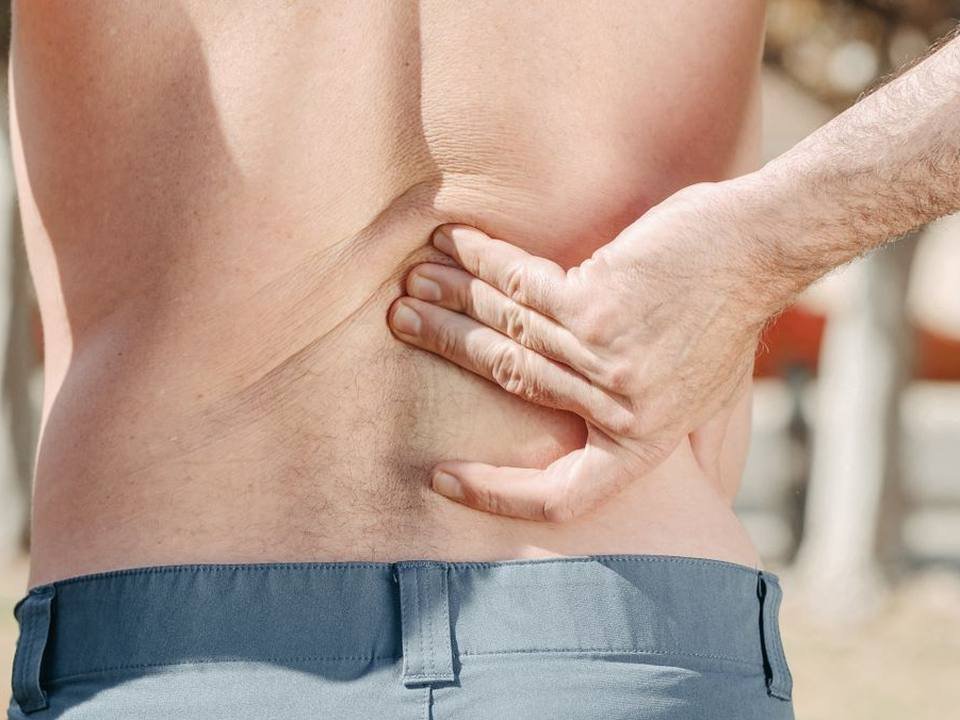
Why your back hurts
Low back pain can come from the discs, the facet joints at the back of the spine, the sacroiliac joints, the muscles and ligaments, or from a nerve root under pressure. Each produces a different pattern, and the pattern is what guides treatment.
Pain that is worse bending forward and sitting often points to the disc. Pain worse on leaning back and on standing for a long time often points to the facet joints. Pain radiating below the knee suggests nerve involvement rather than the back alone.
When imaging is useful, and when it is not
Scanning everyone with back pain does more harm than good. Age-related changes appear on the MRI of almost every adult, and treating a picture rather than a patient leads to unnecessary surgery.
- Imaging is indicated when there are red flags, nerve symptoms, or pain that has failed proper treatment
- MRI shows discs, nerves and soft tissue; CT shows bone detail; X-rays show alignment and instability on movement
- The scan is interpreted alongside your examination, never on its own
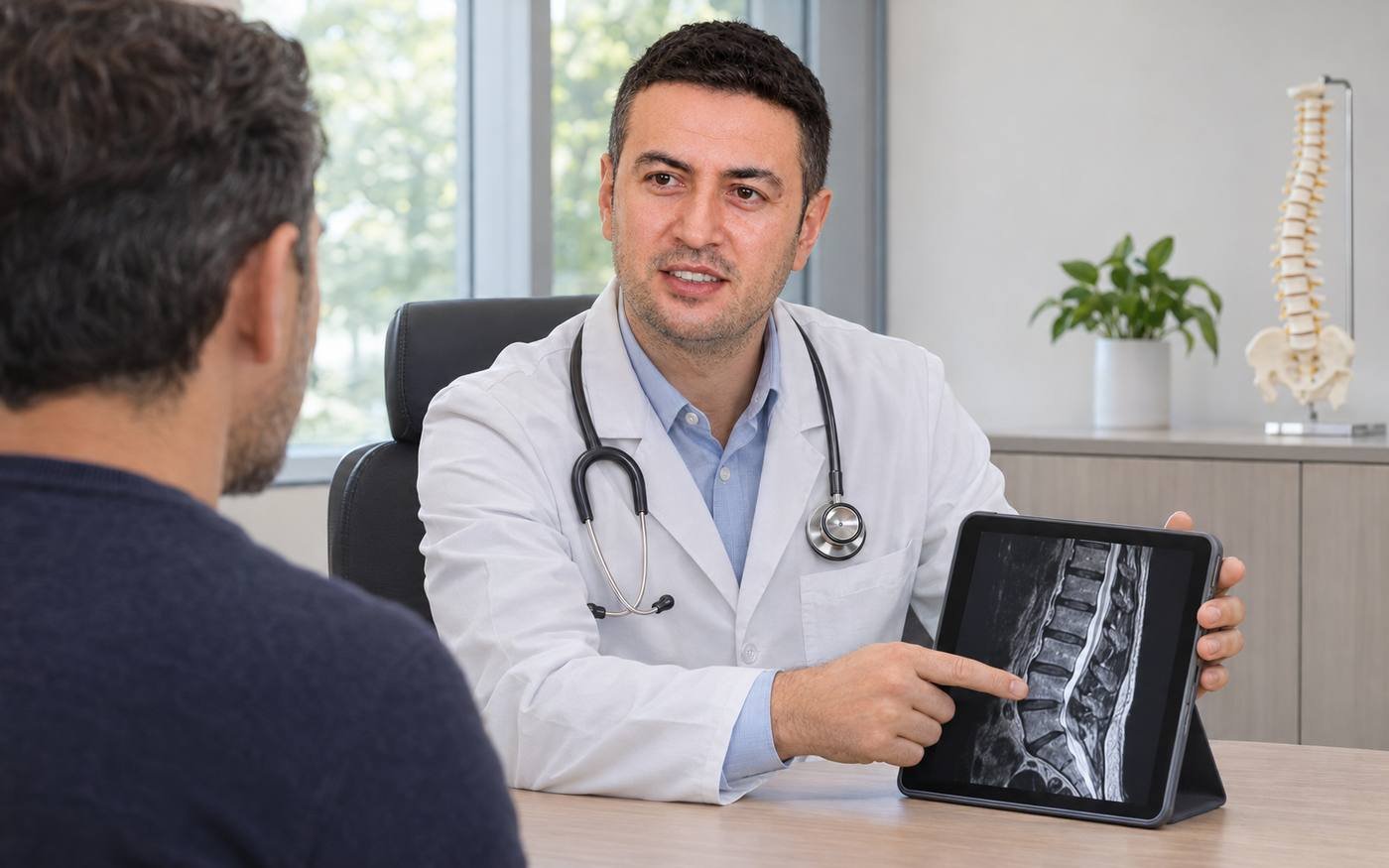
Treatment that works
The evidence supports staying active, a structured exercise and core stability programme, and short courses of appropriate medication. Weight, posture at a desk, and sleep quality all affect outcomes and are part of the plan.
Where a specific pain source is identified, targeted treatment helps: a facet joint or sacroiliac injection for joint pain, or radiofrequency denervation for facet pain that keeps coming back after successful injections.
When surgery is the right answer
Surgery for back pain alone has a far less predictable result than surgery for nerve compression, and Dr. Soufan is conservative about it. It is considered for clear structural problems: significant stenosis, instability such as spondylolisthesis, deformity, fracture, tumour or infection. In those cases minimally invasive fusion or decompression is planned to address the specific problem identified.
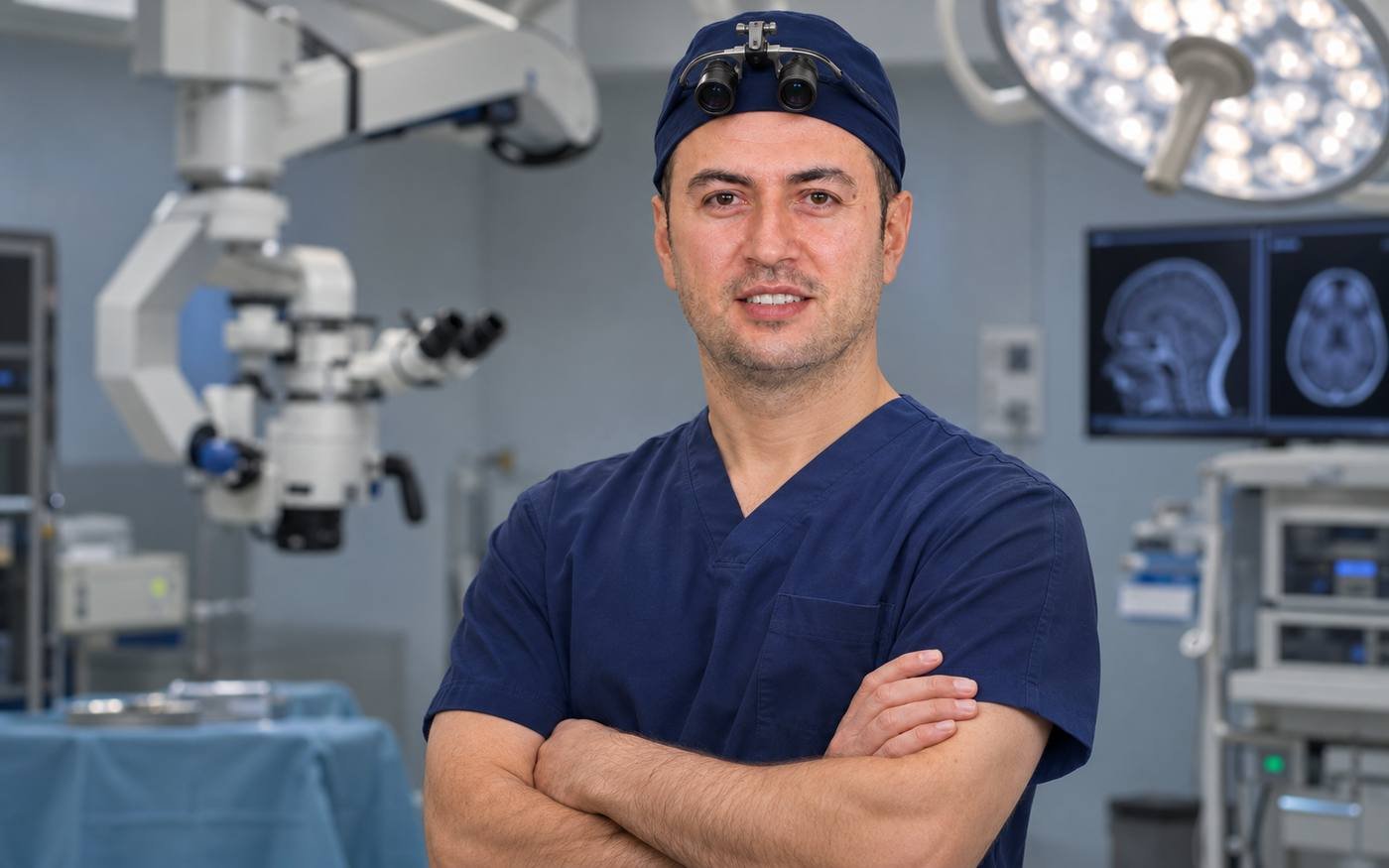

Dr. Nayef Soufan
German board-certified Consultant Neurosurgeon at Saudi German Hospital Dubai, treating brain, spine and nerve conditions.
- German Board (Facharzt) in Neurosurgery, Munich 2017
- EUROSPINE Diploma 2025 and DWG Master Training
- More than 2,100 brain and spine surgeries
- 11 years in the German healthcare system
Your Treatment Journey
- 01Consultation and imaging review
In clinic or by video. Dr. Soufan examines you, reviews your MRI or CT himself and explains what the images actually show.
- 02Diagnosis and all options
You get a clear diagnosis and every reasonable option, non-surgical first. Surgery is discussed only when the findings call for it.
- 03Pre-operative checks and insurance
If you proceed, the Saudi German Hospital team arranges blood tests, anaesthetic review and insurance approval.
- 04The procedure
Performed at Saudi German Hospital Dubai with neuronavigation and intraoperative imaging, through the smallest approach your condition allows.
- 05Follow-up and rehabilitation
Wound check, a staged return to activity and a physiotherapy plan, with Dr. Soufan reviewing your progress until you are back to normal life.
Frequently Asked Questions
Still have a question? Call the clinic and the team will help you.
Call the clinic+971 50 595 4783Do I need an MRI for back pain?
Not always. If there are no red flags and no nerve symptoms, starting treatment and reviewing after a few weeks is usually better than scanning immediately.
My MRI shows disc degeneration. Is that serious?
Disc degeneration is found on the scans of most adults over 40, including many with no pain at all. It only matters if it explains your specific symptoms.
Will surgery fix my back pain?
Surgery is very effective for nerve compression. For back pain alone it is less predictable, which is why a precise diagnosis comes first and non-surgical treatment is exhausted.
What exercise is safe?
Walking, swimming and a graded core stability programme are usually safe and helpful. A physiotherapist will tailor this to your diagnosis rather than giving a generic list.
When should I worry?
See a doctor promptly if you have fever, unexplained weight loss, pain that wakes you at night, pain after significant trauma, a history of cancer, or any leg weakness or bladder problems.
Start With Clarity
Send your MRI or book a consultation. You will leave with a clear diagnosis and every option explained, in your language.
Call+971 50 595 4783